>>

A silky, bright hummus that skips the garlic but keeps all the creaminess and flavor—perfect for sensitive palates, quick snacks, and make-ahead spreads.
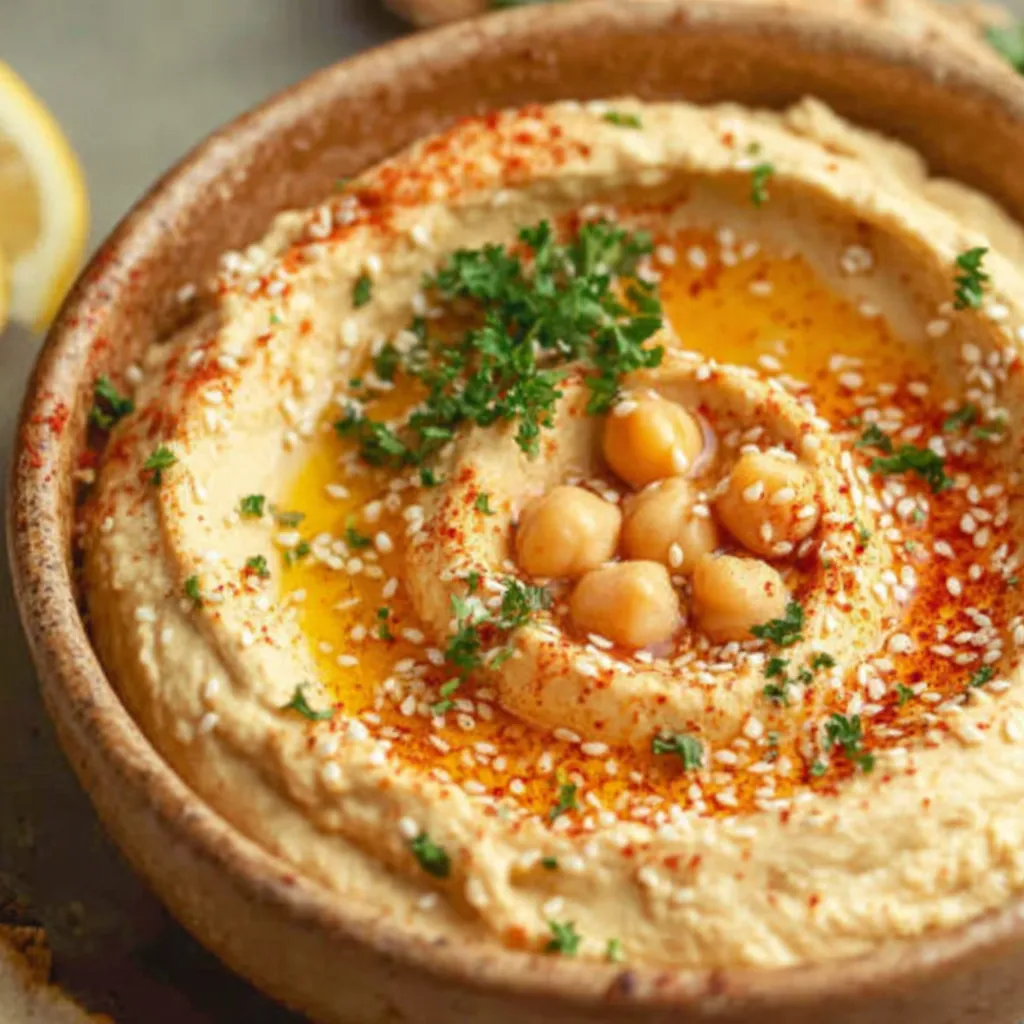
This hummus without garlic is my go-to when I want a smooth, tangy dip that everyone at the table can enjoy. I first developed this version when a friend with a very low tolerance for raw garlic asked for a hummus that still felt authentic but without the bite. The result is a balanced, creamy spread where lemon, tahini, and a whisper of cumin shine. The texture is velvety thanks to a couple of simple techniques, and it stores beautifully for quick snacks or last-minute entertaining.
I remember making a big batch for a picnic last spring. People who always asked for hummus with extra garlic surprised me by reaching for second helpings of this no-garlic version. The smoked paprika and toasted sesame seeds add a finishing touch that makes the hummus feel special. It’s light enough for summer but comforting enough to serve year-round on a platter of warm pita and crisp vegetables.
Personally, I love how forgiving the recipe is. I often double it and tuck half away for quick sandwiches or to elevate a simple salad. Family members who usually prefer heavier spreads appreciate the light lemon brightness here, and the dish always disappears fast at parties.
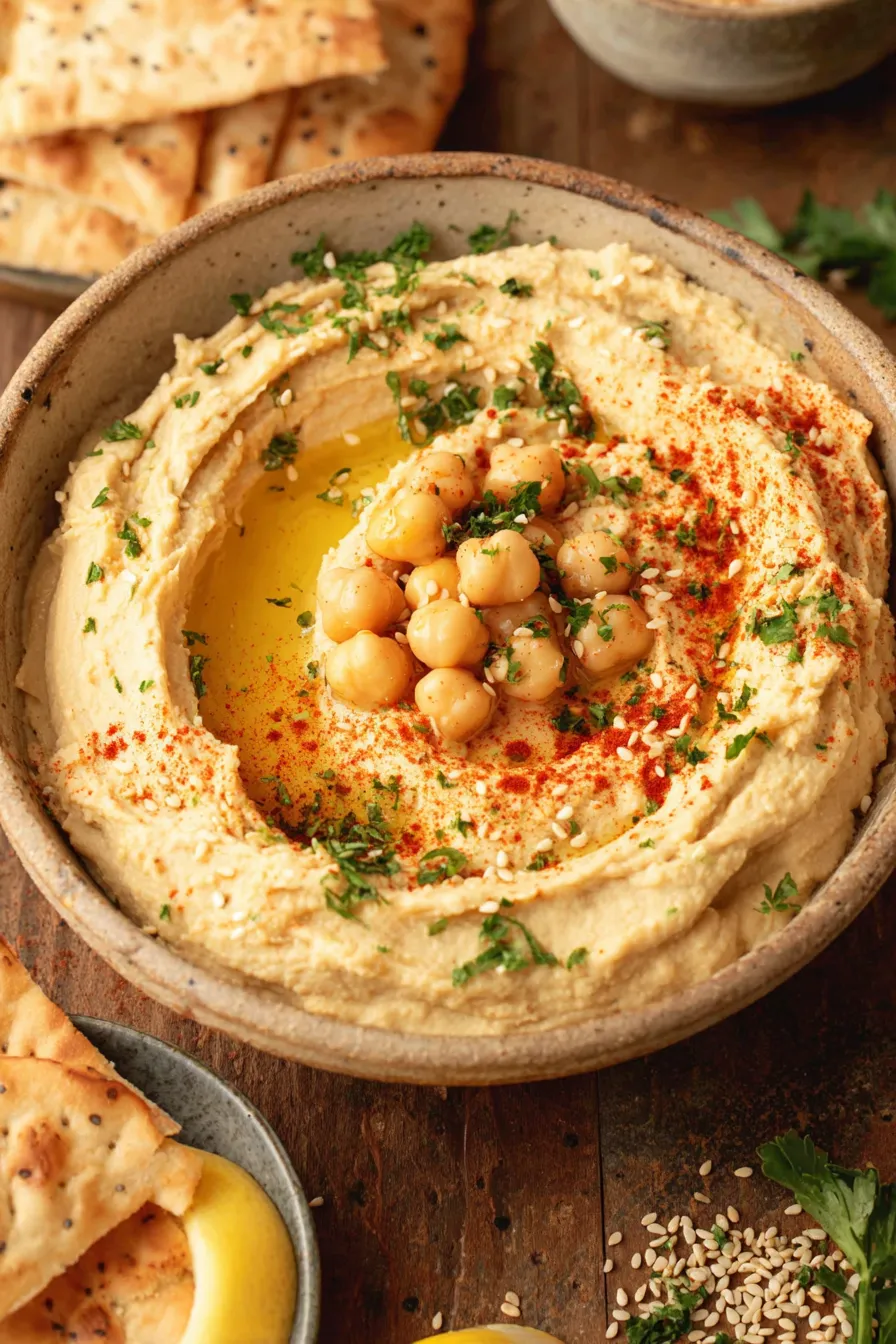
My favorite aspect is how adaptable this base is. I often split a batch: one bowl plain for sandwiches, another swirled with roasted red peppers for color and sweetness. Family members comment on the clean lemon brightness, and hosts appreciate that it’s both allergy-friendly and crowd-pleasing without extra fuss.
Store chilled in an airtight glass container to preserve flavor and color; plastic can sometimes absorb odors. Refrigerate for up to 5 days; the surface may darken slightly due to oxidation—simply stir and top with a fresh drizzle of olive oil before serving. For longer storage, freeze in individual portions (ice cube trays for small dollops or small containers for single servings) for up to 3 months. Thaw in the refrigerator overnight and give it a quick whisk or blend to restore creaminess. If the texture seems dense after freezing, a splash of water or lemon juice during stirring refreshes it.
If tahini is unavailable, substitute 3 tablespoons of natural peanut butter or 1/4 cup plain Greek yogurt for a different but still creamy profile—note that yogurt makes the spread dairy-containing. For oil-free versions, omit the olive oil and use an extra tablespoon of water and 1 tablespoon tahini to retain body. Canned chickpeas can be replaced with 1 1/2 cups cooked dried chickpeas; peel them for an ultra-smooth texture. Lemon juice can be partially substituted with 1 tablespoon of white wine vinegar if you prefer a less citrus-forward flavor.
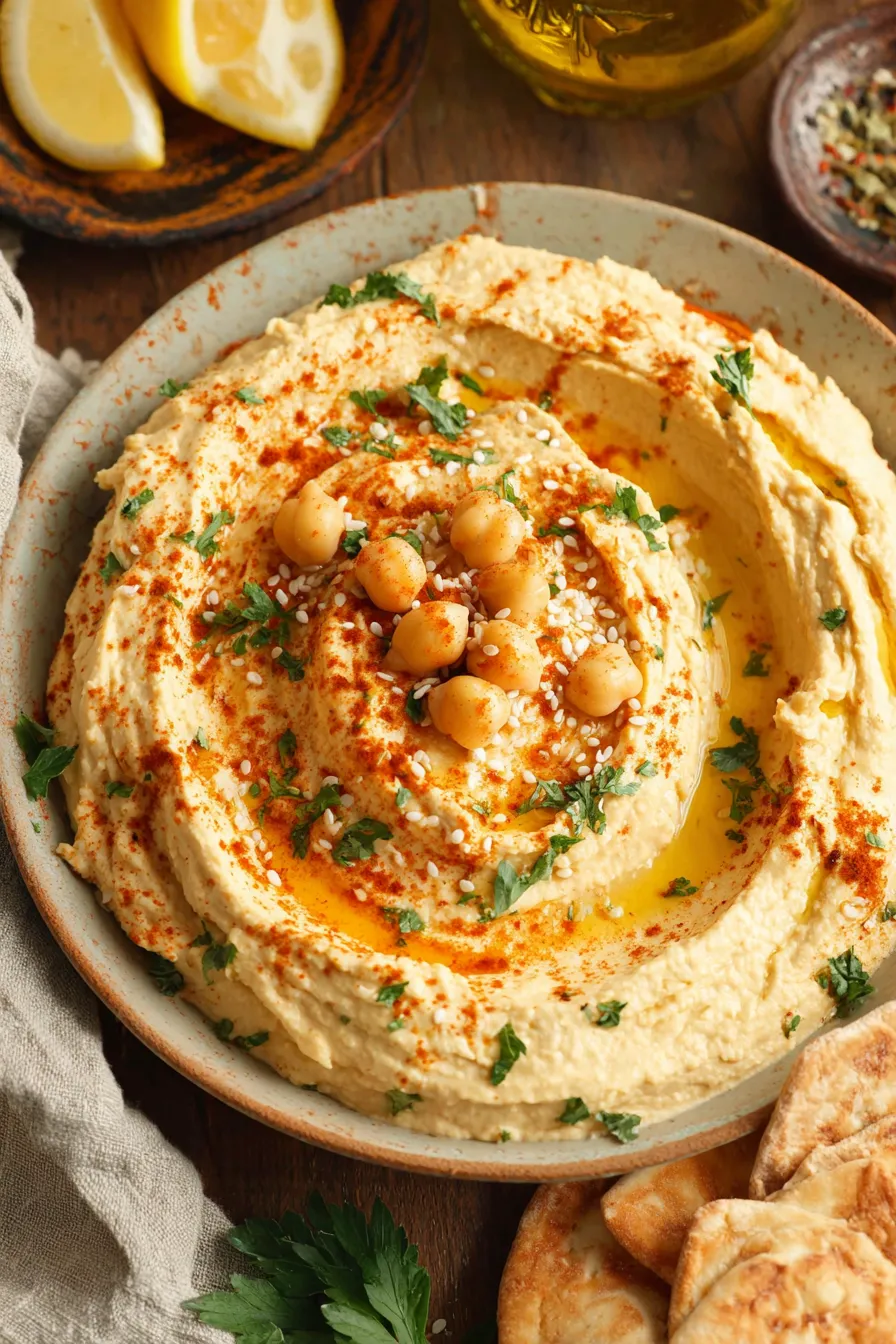
Serve with warm pita, toasted flatbread, or crisp vegetable sticks like cucumber, bell pepper, and carrot. Use as a spread on bagels or sandwiches, a sauce for grain bowls, or a base for a mezze platter with olives, roasted vegetables, and feta. Garnish with a drizzle of olive oil, a pinch of smoked paprika, chopped parsley, and a scattering of sesame seeds to create visual contrast and added texture. For a heartier snack, top with a spoonful of chopped roasted tomato and a sprinkle of toasted pine nuts.
Hummus has longstanding roots across the Eastern Mediterranean and Levant. Traditional preparations vary widely by region and family—some prefer it chunky, others silky-smooth. Tahini and chickpeas are the foundational pair, while lemon and cumin offer bright and warm counterpoints. Leaving out garlic is a simple modern adaptation for dietary sensitivity, but the dish still honors the classic balance of earthy legume, nutty sesame, and bright citrus that has made it a staple across cultures for centuries.
In summer, fold in diced roasted tomatoes or grilled zucchini for a fresh twist. In autumn and winter, stir in a tablespoon of roasted pumpkin puree with warm spices like cinnamon and nutmeg for a seasonal spread. For holiday entertaining, top with pomegranate arils and toasted pistachios to add color and celebratory texture. Adjust the lemon and cumin levels with seasonal produce—brighter lemon for summer, warmer cumin for winter days.
Make a double batch and portion into 1/2-cup containers for grab-and-go lunches. Use the hummus as a protein-rich sandwich spread or portion alongside prepped salads and roasted vegetables for a week of balanced meals. Keep a small container of chopped parsley and a tiny bottle of olive oil to refresh portions before serving. Label containers with the date and use within five days for best quality.
Final thoughts: this garlic-free hummus is a versatile, easy-to-make staple that adapts to many meals and preferences. It’s forgiving, quick, and consistently a crowd pleaser—invite friends, share a bowl, and enjoy the simple pleasure of good food.
Use ice cubes during blending to keep the mixture cool and help create a silkier texture.
Always taste and adjust salt and lemon at the end—citrus brightens hummus and salt elevates flavors.
Reserve a tablespoon of olive oil for drizzling on top to keep the surface moist and glossy.
If you want an ultra-smooth texture, peel chickpeas after rinsing by gently pinching them between your fingers.
This nourishing hummus without garlic recipe is sure to be a staple in your kitchen. Enjoy every moist, high protein slice — it is perfect for breakfast or as a wholesome snack any time.
Yes. Chill in an airtight container for up to 5 days. Stir and add a drizzle of olive oil before serving.
Yes. Portion into freezer-safe containers for up to 3 months. Thaw overnight in the refrigerator and stir before serving.
Recipe data validation failed
Please check the recipe data format. See console for details.
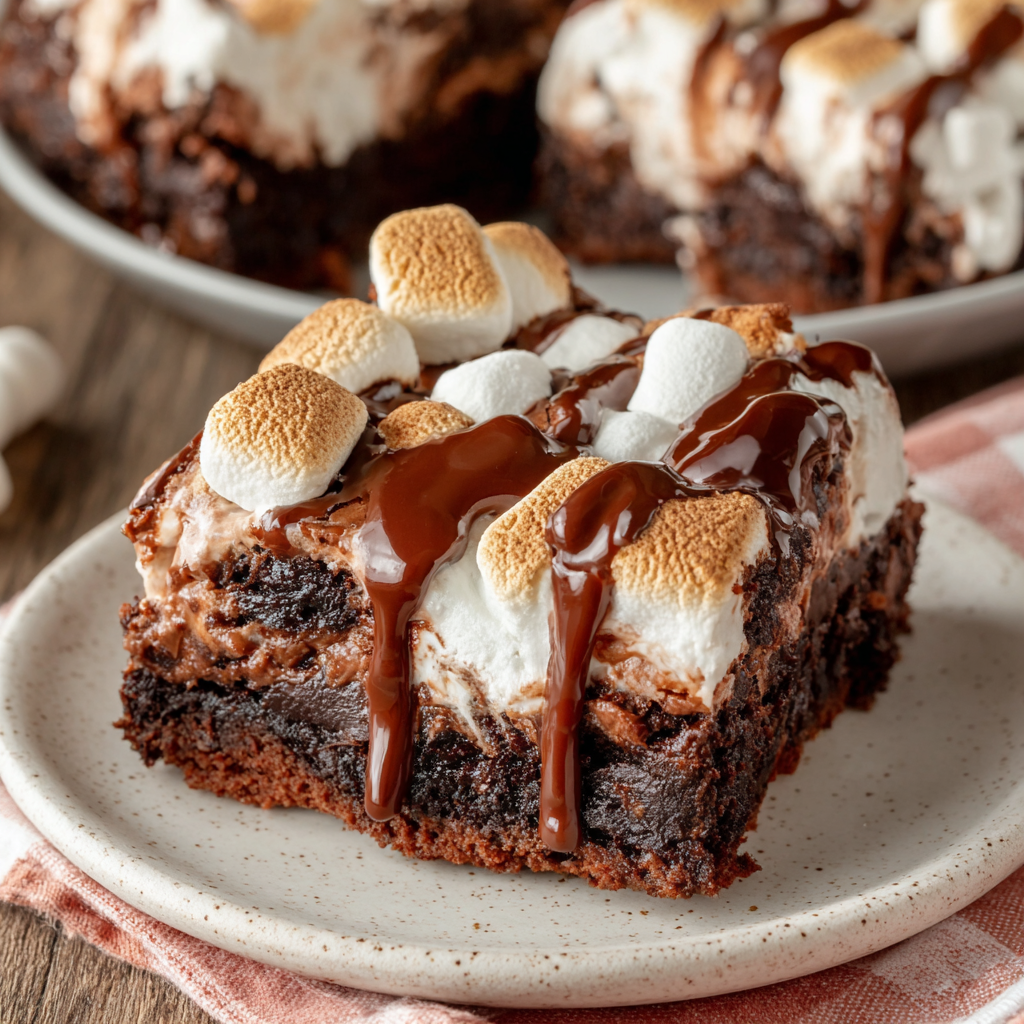
Ultra-fudgy brownies packed with chocolate chunks, crowned with gooey marshmallows and glossed with warm chocolate frosting for a decadent crowd-pleaser.
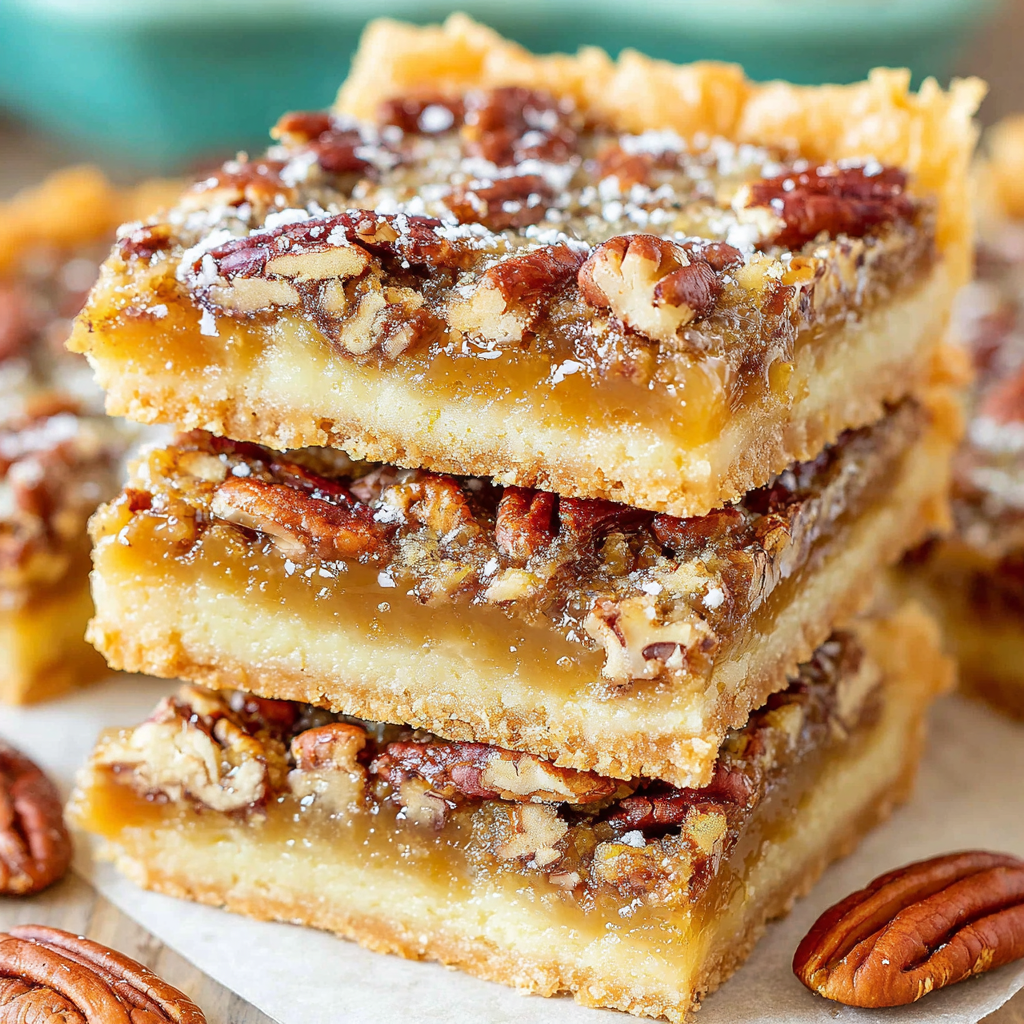
Buttery shortbread crust topped with a gooey brown sugar-pecan filling. Ten minutes to prep, irresistibly crunchy edges, and perfect for make-ahead treats.
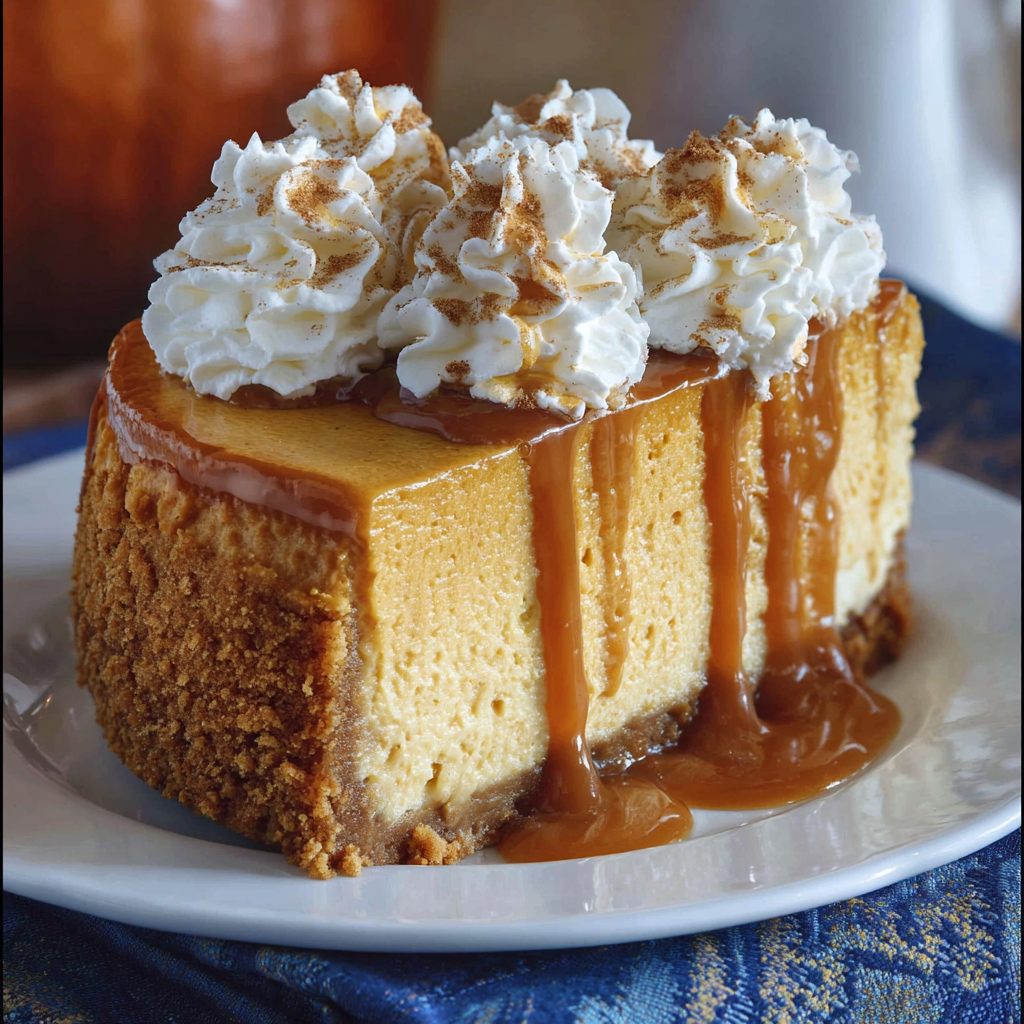
Silky, crack-free pumpkin cheesecake with warm spice, buttery graham crust, and make-ahead convenience for showstopping holiday dinners.
Leave a comment & rating below or tag @paletina on social media!
Enjoyed this recipe? Share it with friends and family, and don't forget to leave a review!
This recipe looks amazing! Can't wait to try it.
Comments are stored locally in your browser. Server comments are displayed alongside your local comments.

Join to receive our email series which contains a round-up of some of our quick and easy family favorite recipes.