
Coconut Shrimp

Crisp, golden coconut-coated shrimp fried to perfection — a crowd-pleasing appetizer or weeknight treat with a tropical crunch.
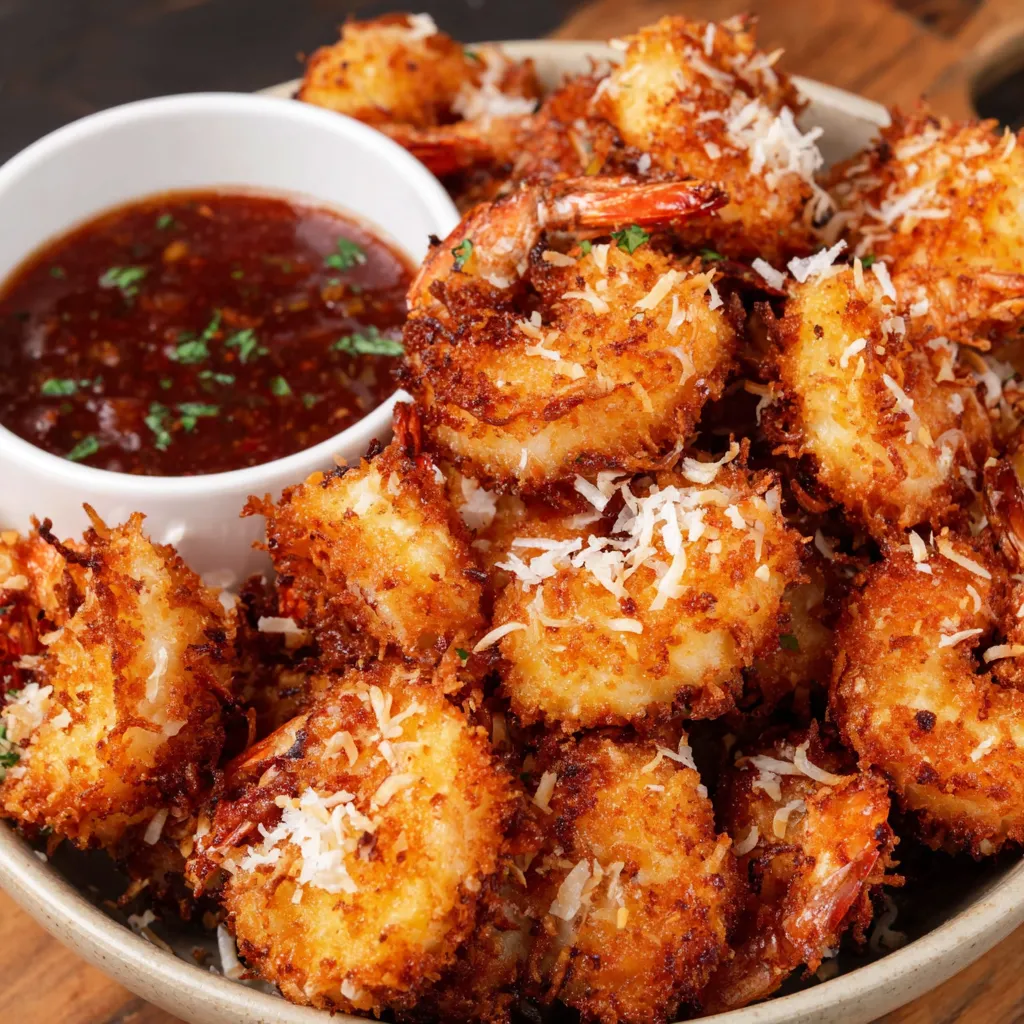
This coconut shrimp is one of those recipes that instantly transports me back to sunlit afternoons and family gatherings. I first fell in love with this version during a summer potluck when a neighbor brought a platter of crunchy, sweet-tart shrimp that vanished in minutes. I recreated the coating, refined the frying temperature, and learned how to keep the coconut crisp while the interior shrimp stays tender. The contrast between the lightly sweet coconut, the crunchy panko, and the juicy sea-salty shrimp makes every bite addictive.
I make this when I want guests to feel pampered without spending hours in the kitchen — it reads fancy but comes together quickly. The texture is the star: a delicate shell of crisp panko and coconut gives way to a plump, springy shrimp. The aroma of toasted coconut and frying oil always gets people off the couch and into the kitchen. I prefer using large shrimp for balance, and I have a few tricks below to keep the coating adhered and the coconut perfectly golden, not burned.
Why You'll Love This Recipe
- Fast weeknight turnaround: from start to finish in about 35 minutes, ideal when you want a special meal in minimal time.
- Accessible pantry ingredients: uses panko, shredded coconut, and simple seasonings you likely already have on hand.
- Textural contrast: light, airy coconut and crunchy panko exterior with a tender, juicy interior every time.
- Make-ahead friendly: you can dredge the shrimp and refrigerate for up to 2 hours before frying to save time when guests arrive.
- Versatile for serving: works as an appetizer, main with a salad, or party platter with dipping sauces like sweet chili or mango salsa.
I remember the first time I served these to my family — the kids insisted on trying the crunchy edge first and then the plump tail. We discovered that a squeeze of lime brightened the flavor beautifully, and leftovers reheated briefly under the broiler keep some of the crispness. Over the years I have swapped oils and adjusted frying times to keep the coating light rather than heavy, and these adjustments made the recipe a repeat favorite.
Ingredients
- 1 pound raw shrimp, deveined and peeled: Choose large (16/20 or 21/25 count) for best texture; buy shell-on if you prefer more flavor but peel before coating. Look for wild-caught or sustainably farmed labels depending on preference.
- 1/2 cup all-purpose flour: Acts as the first barrier for the egg to cling to; helps the exterior bind. Use a spoon-and-level method for accurate measurement.
- 1/2 teaspoon garlic powder: Adds a subtle savory note; use fresh-ground if available for brighter flavor.
- 1/2 teaspoon sea salt: Enhances the shrimp and coconut; kosher salt works too but adjust by volume if using fine table salt.
- 1/2 teaspoon coarse black pepper: Freshly cracked provides a lively bite that contrasts the sweet coconut.
- 4 egg whites: Frothy whites give the coating a light, airy glue that helps panko and coconut adhere and crisps up beautifully.
- 1 cup panko bread crumbs: Japanese-style panko provides large flakes that create loft and crunch; do not swap for fine breadcrumbs if you want the characteristic texture.
- 1 1/3 cup shredded coconut: Sweetened or unsweetened both work — sweetened browns faster and yields a sweeter edge; unsweetened keeps things more balanced.
- 2 cups vegetable oil: For frying; neutral oils like canola or peanut are ideal. Coconut oil lends flavor but has a lower smoke point; use refined coconut oil if you prefer that profile.
Instructions
Prepare the shrimp:Thaw the shrimp completely in the refrigerator or under cold running water. Pat each shrimp dry with paper towels — excess moisture will prevent the coating from sticking and will make the oil spit. If tails are on, leave them for easy serving; remove tails if you prefer a no-fuss bite.Make the dry mix:Combine the 1/2 cup flour, 1/2 teaspoon garlic powder, 1/2 teaspoon sea salt, and 1/2 teaspoon black pepper in a shallow bowl. Whisk to aerate. This seasoned flour seasons the shrimp and creates a dry surface for the egg white to grab.Whisk the egg whites:In a second shallow bowl whisk the 4 egg whites until frothy and slightly thickened but not stiff — a fork or small whisk works fine. The froth adds volume so the panko-coconut sticks without becoming gummy.Combine the coating:In a third wide bowl mix the 1 cup panko and 1 1/3 cup shredded coconut so the flakes are evenly distributed. If using sweetened coconut, break up any clumps. Keep this bowl near your dredging station for efficiency.Dredge the shrimp:One at a time, dust shrimp in the flour mixture, shake off excess, dip into the frothy egg whites, then press into the panko-coconut mix until thoroughly coated. Place each coated shrimp on a single layer on a baking sheet to rest; letting the coating set for 5–10 minutes helps adhesion.Heat the oil:Fill a Dutch oven or heavy stock pot with 3–4 inches of oil, about 2 cups depending on pot size. Heat to 350°F (175°C) using a candy or deep-fry thermometer — it usually takes 10–15 minutes. Maintain temperature; if oil cools too much the coating will absorb oil and become greasy.Fry the shrimp:Working in small batches, gently lower shrimp into the oil and fry until golden brown, about 1 to 1 1/2 minutes. Turn each shrimp once or twice with tongs for even color. Do not overcrowd the pot; too many at once drops the oil temperature.Drain and serve:Remove cooked shrimp to paper towels to drain excess oil. Let rest 2 minutes before serving; a quick squeeze of lime brightens the flavor. Serve with a dipping sauce such as sweet chili, mango salsa, or a zesty aioli.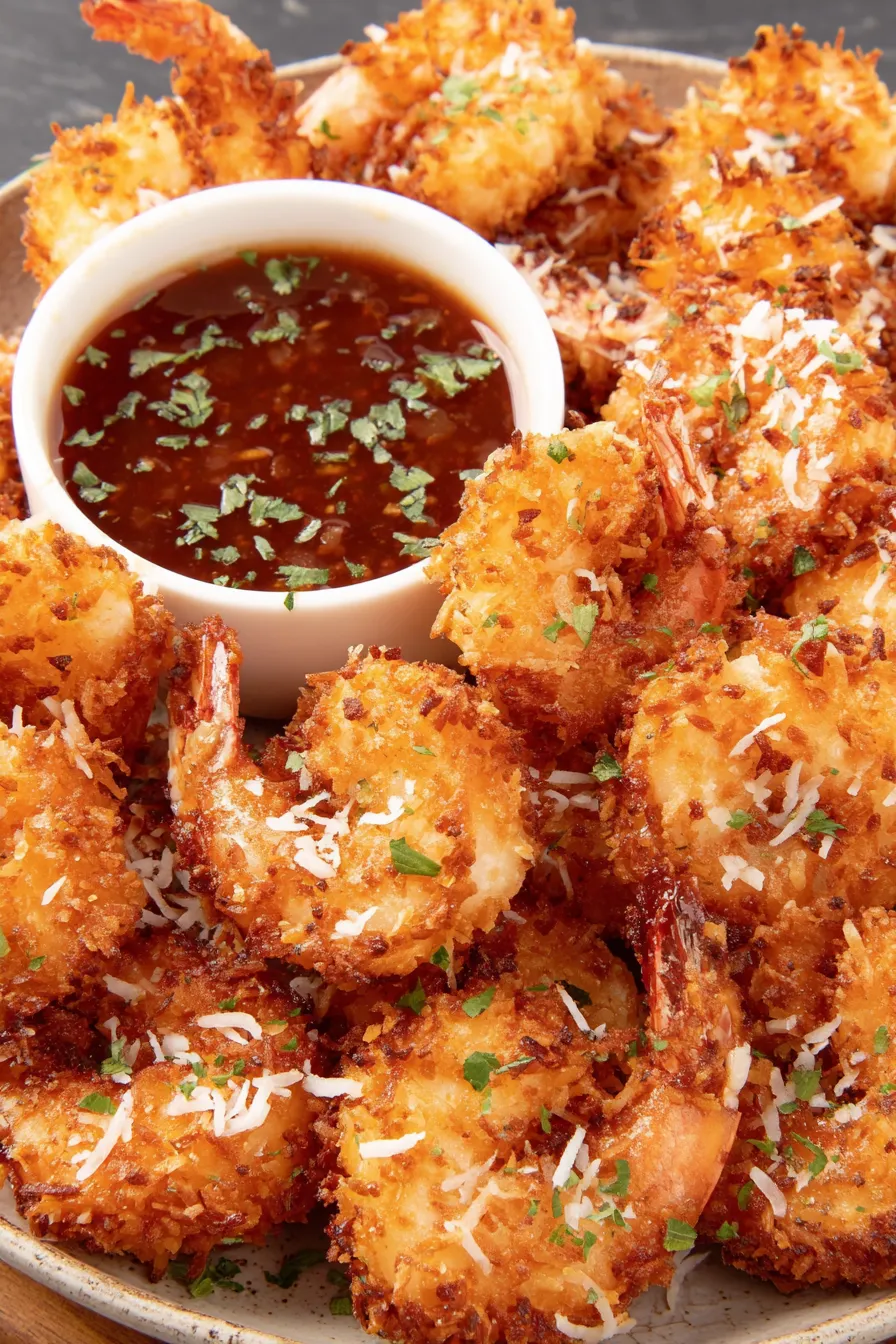
You Must Know
- These are best eaten immediately for maximum crispness; the coating will soften as moisture from the shrimp migrates inward over time.
- Refrigerate leftovers in an airtight container up to 48 hours; re-crisp under the broiler for 2–3 minutes per side.
- The shrimp cooks extremely quickly; watch closely and maintain oil at 350°F to avoid undercooking or burning the coconut.
- High in protein and satisfying, but not low-carb or gluten-free unless ingredients are substituted; contains shellfish and egg allergens.
My favorite thing about this dish is watching people’s faces when they bite into the first piece — that audible crunch followed by a surprised, delighted smile. We’ve served this at holiday parties and casual backyard barbecues; once I made a large batch for a birthday and neighbors texted asking for the recipe before the night was over. The simplicity of ingredients hides the skill in timing and temperature, which once dialed in yields consistent, beautiful results.
Storage Tips
Cool shrimp on a wire rack briefly before transferring to an airtight container lined with a paper towel to absorb any residual oil. In the refrigerator, use within 48 hours for best texture. For longer storage, freeze fully cooled cooked shrimp in a single layer on a sheet pan, then transfer to a freezer bag for up to 3 months. To reheat from frozen, thaw overnight in the fridge and re-crisp under a hot broiler or in a 400°F oven for 4–6 minutes, turning once. Avoid microwaving, which will make the coating soggy.
Ingredient Substitutions
To make a gluten-free version, swap the all-purpose flour for rice flour or a gluten-free flour blend and use gluten-free panko. For a grain-free approach, almond flour can replace the flour step and crushed pork rinds mixed with unsweetened shredded coconut can stand in for panko. If you prefer a richer flavor, use refined coconut oil for frying; for a lighter neutral taste, choose canola or peanut oil. If egg whites are an issue, a thin batter of aquafaba can sometimes substitute, though adhesion will differ.
Serving Suggestions
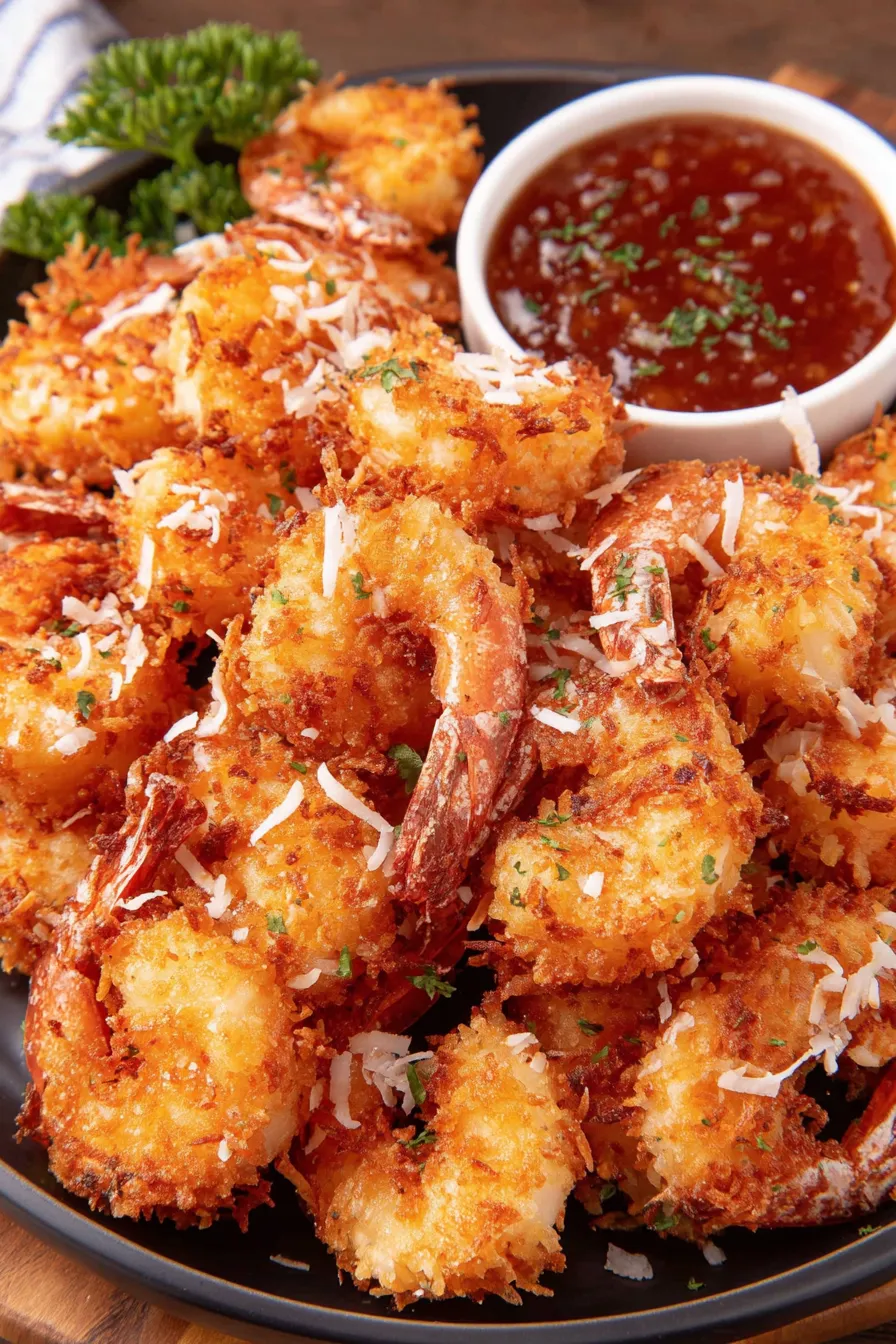
Serve as an elegant appetizer plated on a long platter with small bowls of dipping sauces: sweet chili, mango chutney, lime-garlic aioli, or a soy-ginger dipping sauce. For a main course, pair with a bright green salad, coconut rice, or grilled pineapple slices to echo the tropical notes. Garnish with lime wedges and chopped cilantro for color and freshness. These also make a festive finger-food for cocktail parties and pair beautifully with sparkling wine or a crisp lager.
Cultural Background
Coatings that combine breadcrumbs with shredded coconut are common in tropical and coastal cuisines where coconut is plentiful. The idea of pairing sweet coconut with savory seafood likely evolved in regions where both ingredients were staples, and the contemporary panko-coconut crust is a fusion found in coastal American and Caribbean-inspired fare. Restaurants popularized the dish as a shareable appetizer in the late 20th century, and home cooks soon adapted the technique for easy entertaining.
Seasonal Adaptations
In summer, serve with fresh mango salsa and lime for a bright, fruit-forward plate. In winter, swap mango for a roasted red pepper chutney or cranberry-habanero sauce for holiday contrast. For holiday entertaining, use sweetened coconut for a festive crunch and pair with spiced dipping sauces. Adjust frying times slightly if making very small shrimp so the interior never overcooks.
Meal Prep Tips
Dredge shrimp and arrange on a sheet pan covered tightly with plastic wrap up to 2 hours before frying — this helps you focus on frying and serving hot food. If feeding a crowd, fry in multiple small batches and keep finished shrimp on a wire rack set over a sheet pan in a 200°F oven for up to 20 minutes to keep warm and crisp. Bring the oil back to 350°F between batches to ensure consistent color and texture.
There’s something joyful about serving a simple dish that looks and tastes special. This coconut shrimp checks that box every time — a little bit tropical, reliably crunchy, and unfailingly delicious. Try it once and it will likely become a requested favorite at your next gathering.
Pro Tips
Pat shrimp very dry before dredging to ensure the coating adheres.
Keep oil at a steady 350°F to avoid greasy or undercooked coating.
Let coated shrimp rest 5–10 minutes before frying to improve adhesion and reduce flaking.
Use a wire rack rather than paper towels to keep the crust crisp while resting briefly.
If coconut browns too quickly, lower the temperature and fry smaller batches to maintain color control.
This nourishing coconut shrimp recipe is sure to be a staple in your kitchen. Enjoy every moist, high protein slice — it is perfect for breakfast or as a wholesome snack any time.
FAQs about Recipes
How do I reheat leftover coconut shrimp?
If you need to reheat, use a hot oven or broiler to restore crispness for a few minutes rather than the microwave.
Can I use frozen shrimp?
Yes — thaw fully in the refrigerator or under cold running water and pat dry before coating and frying.
Tags
Coconut Shrimp
This Coconut Shrimp recipe makes perfectly juicy, tender, and flavorful steak every time! Serve with potatoes and a side salad for an unforgettable dinner in under 30 minutes.
Instructions
Prepare the shrimp
Thaw shrimp completely, rinse and pat dry. Remove shells if desired and leave tails for presentation. Drying thoroughly ensures the coating adheres and prevents oil spatter.
Mix the dry ingredients
Combine flour, garlic powder, salt, and pepper in a shallow bowl and whisk together to aerate. This seasoned flour seasons the shrimp and creates a dry surface for the egg whites to adhere to.
Whisk egg whites
Froth the egg whites in a second shallow bowl until slightly foamy but not stiff. The frothy whites add volume and help the panko-coconut mixture cling without becoming gummy.
Combine panko and coconut
In a third bowl, toss the panko and shredded coconut to combine. Break up any clumps and have this mixture ready at the dredging station for efficient assembly.
Dredge and coat
Dust shrimp in the seasoned flour, shake off excess, dip into the frothy egg whites, then press into the panko-coconut mixture until fully coated. Place on a single layer on a sheet pan to rest for 5–10 minutes to set.
Heat oil
Fill a heavy pot with 3–4 inches of oil and heat to 350°F (175°C). Use a thermometer to maintain temperature; heating usually takes 10–15 minutes depending on stove and pot size.
Fry until golden
Fry shrimp in small batches for about 1 to 1 1/2 minutes until golden brown and crispy. Turn shrimp once or twice for even color. Avoid overcrowding the pot so temperature remains stable.
Drain and serve
Transfer cooked shrimp to paper towels or a wire rack to drain. Let cool for 1–2 minutes, garnish with lime, and serve with your choice of dipping sauces.
Last Step: Please leave a rating and comment letting us know how you liked this recipe! This helps our business to thrive and continue providing free, high-quality recipes for you.
Nutrition
Did You Make This?
Leave a comment & rating below or tag
@paletina on social media!
Categories:
You might also like...
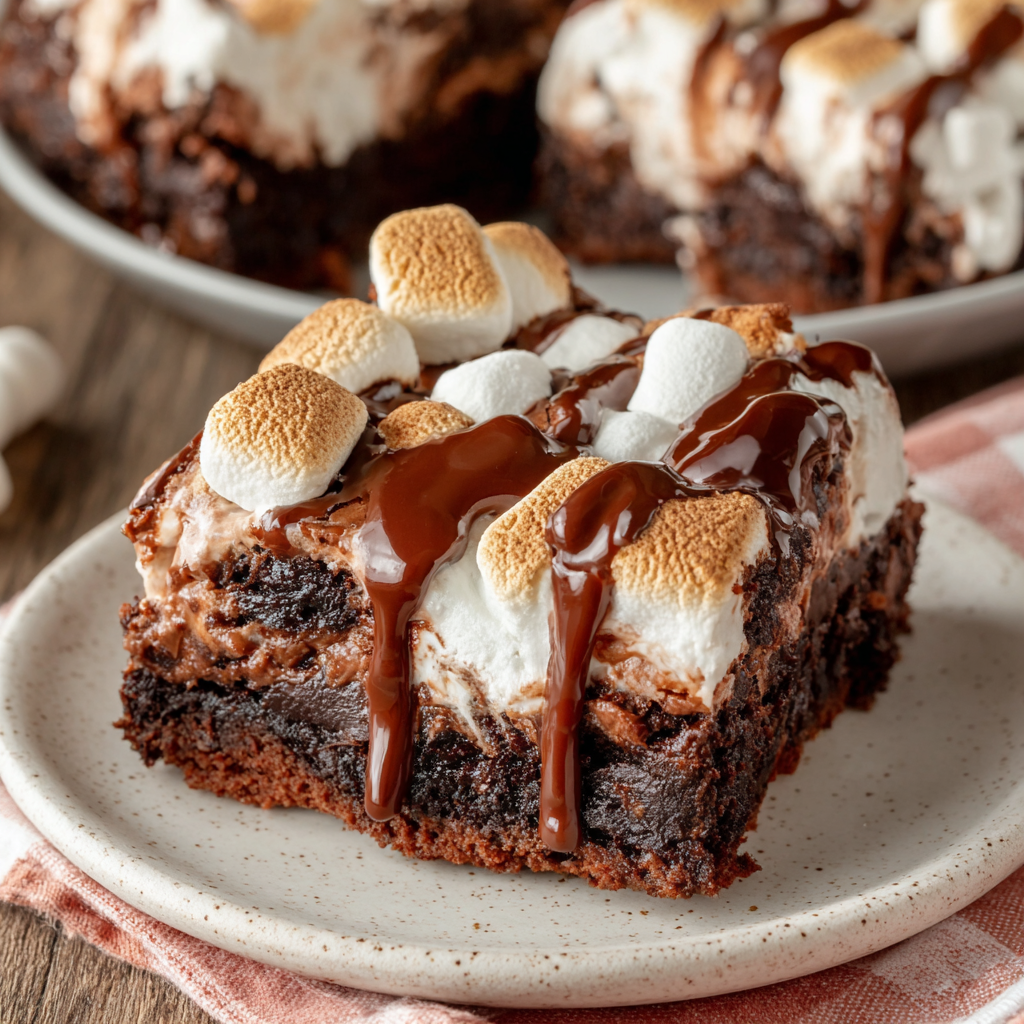
Chocolate Chunk Marshmallow Brownies
Ultra-fudgy brownies packed with chocolate chunks, crowned with gooey marshmallows and glossed with warm chocolate frosting for a decadent crowd-pleaser.
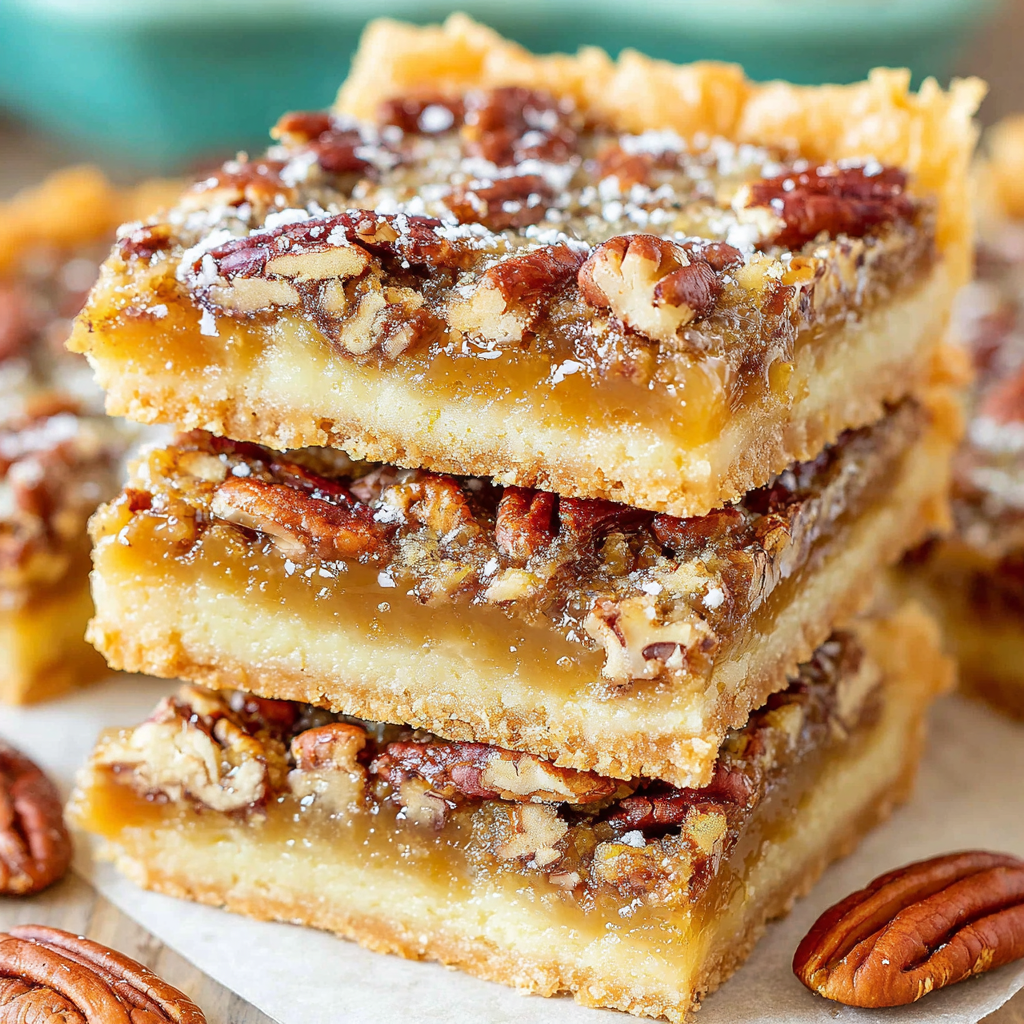
Buttery Pecan Pie Bars
Buttery shortbread crust topped with a gooey brown sugar-pecan filling. Ten minutes to prep, irresistibly crunchy edges, and perfect for make-ahead treats.
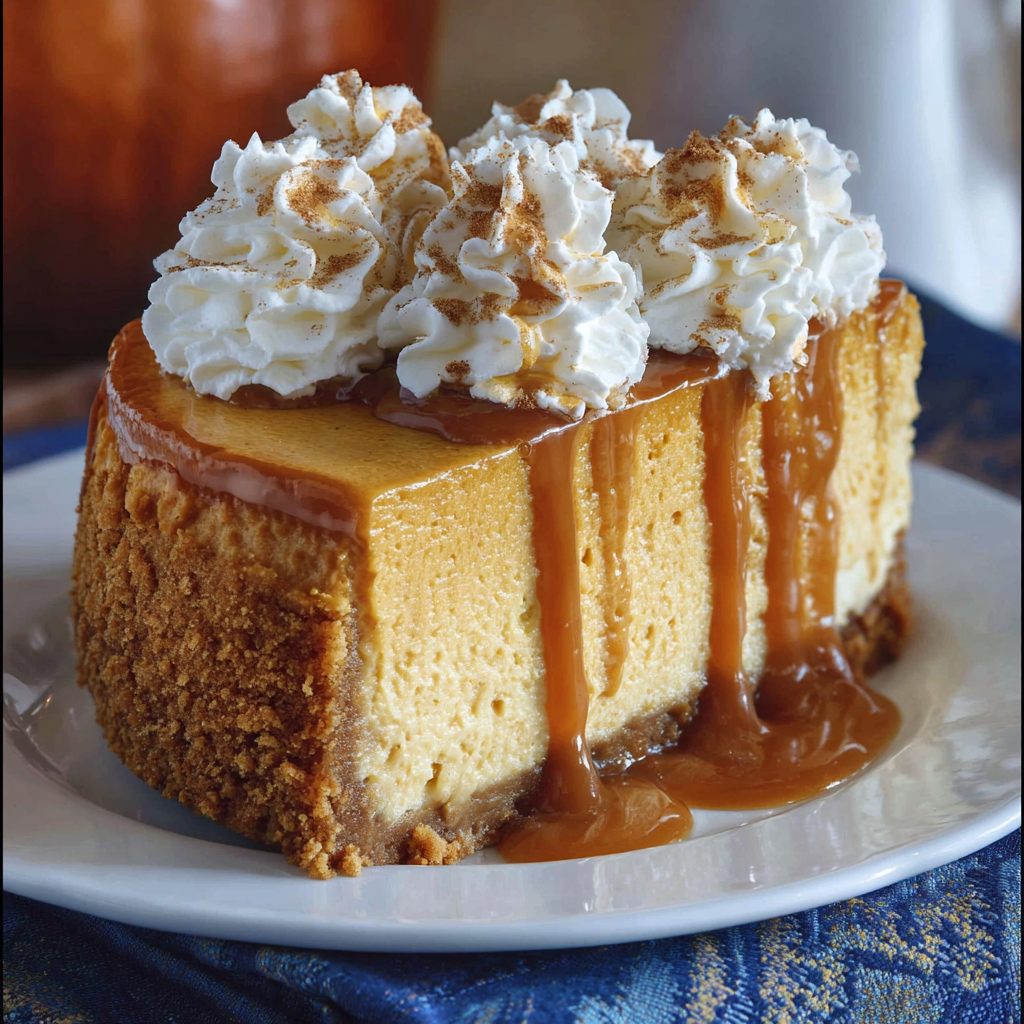
Creamy Pumpkin Cheesecake
Silky, crack-free pumpkin cheesecake with warm spice, buttery graham crust, and make-ahead convenience for showstopping holiday dinners.
Did You Make This?
Leave a comment & rating below or tag @paletina on social media!
Rate This Recipe
Share This Recipe
Enjoyed this recipe? Share it with friends and family, and don't forget to leave a review!
Comments (1)
This recipe looks amazing! Can't wait to try it.
Comments are stored locally in your browser. Server comments are displayed alongside your local comments.

Hi, I'm Isabella!
What's Popular
30-Minute Meals!
Join to receive our email series which contains a round-up of some of our quick and easy family favorite recipes.